
Electromagnetic Actuator Technology Column: From Basics to the Latest Trends
Column
[Low-Outgassing, Clean Specification] What Is a “Non-Contaminating” Shutter Solenoid for Vacuum and Optical Environments?
2.Why “Outgassing” Is a Concern in Vacuum and Clean Environments
3.Features of Takano’s Low-Outgassing, Clean-Specification Shutter Solenoids
4.Main Applications of Low-Outgassing Shutter Solenoids
1.Introduction
Have you experienced issues with equipment used in vacuum environments, such as “the optical system inexplicably becoming fogged,” “sensor output shifting,” or “performance deteriorating for no apparent reason”? One possible cause is outgassing, or the release of gases from components inside the equipment.
A commonly overlooked source is the opening-and-closing actuator (shutter) positioned near the optical path. In this column, we explain why low-outgassing specifications are required in vacuum and clean environments, as well as the key measures implemented by Takano.
2. Why “Outgassing” Is a Concern in Vacuum and Clean Environments
Outgassing refers to trace gaseous components released from materials such as resins, adhesives, greases, and wire insulation materials. Even materials that remain stable in the atmosphere may release their contained volatile components more readily when exposed to vacuum or high-temperature environments.
In a vacuum environment, the released gases may migrate inside the equipment and condense or adhere to low-temperature surfaces such as lenses, mirrors, sensors, and electrical contacts. Once deposited, these contaminants are difficult to remove and may gradually accumulate as the equipment operates.
In particular, drive components such as shutters that open and close the optical path and filter-switching mechanisms are often positioned near lenses and mirrors. Therefore, if the drive components themselves become sources of outgassing, the released substances may directly deposit on nearby optical components, potentially causing a decline in transmittance or reflectance and a deterioration in measurement accuracy.
For this reason, even small drive components are required to have a high level of cleanliness and low outgassing performance, just like optical components and sensors.
3.Features of Takano’s Low-Outgassing, Clean-Specification Shutter Solenoids
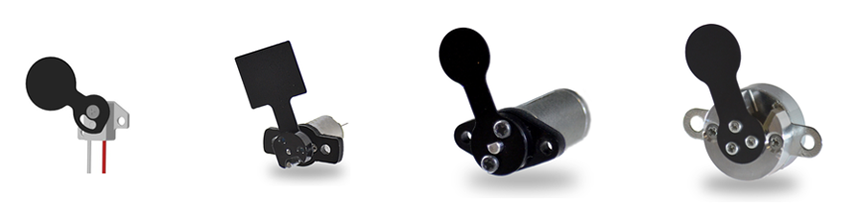
At Takano, we develop our products from three perspectives—(1) material design, (2) component cleaning, and (3) assembly environment—to achieve the low outgassing and high cleanliness required in vacuum and clean environments.
| Key Points of the Measures | Specific initiatives undertaken | Benefits obtainable |
|---|---|---|
| (1) Materials Design |
Select low-outgassing materials for bearings, lead wire insulation, adhesives, and other components. | Suppress the sources of outgassing themselves, reducing the risk of contamination to surrounding components. |
| (2) Parts cleaning (degreasing) |
Before assembly, perform degreasing and cleaning to remove cutting oil, rust-preventive oil, and fine contaminants. Wipe the exterior with ethanol. | Prevent the introduction of oil and contaminants into the assembly process and reduce particles. |
| (3) Assembly Environment |
Wear clean gloves and, as necessary, assemble and package the items in a clean bench or an ISO 14644-1 Class 7–equivalent cleanroom. | Delivered while maintaining a high level of cleanliness through consistent production in a clean environment. |
As the required level of vacuum and cleanliness increases, so do the number of processes and management items, which also affects costs. Takano proposes specifications that balance performance and cost by optimally combining (1) material selection, (2) cleaning processes, and (3) assembly environments according to the vacuum level, cleanliness, and operating environment required by the customer.
>> Bi-stable Optical Shutter | Takano Co.,Ltd.
https://www.takano-sanki21.com/sanki/en/products/optical-shutter/
4. Main Applications of Low-Outgassing Shutter Solenoids
Semiconductor Manufacturing Equipment and Vacuum Process Equipment
Used to control light intensity and block light inside vacuum chambers. Outgassing from the shutter may contaminate wafers and optical components, potentially reducing yield. Low-outgassing, clean specifications help mitigate these contamination risks and contribute to the stable operation of equipment.
Analysis and Measurement Equipment / Laser Equipment
The cleanliness of optical systems and sensors directly affects measurement accuracy. For shutters operating near optical paths, achieving both low outgassing and assembly in a clean environment helps maintain precision.
Space and Satellite Equipment
Because cleaning and component replacement are not possible after launch, outgassing from onboard equipment can adhere to lenses, sensors, solar panels, and other components, directly resulting in performance degradation. This is a field in which the selection of low-outgassing materials is particularly important, including for moving components such as shutters.
5. Frequently Asked Questions (FAQ)
6.Conclusion
In vacuum and clean environments, actuator performance is not the only important consideration; ensuring that the equipment environment remains free from contamination is equally essential. In particular, for shutter solenoids used near optical components such as lenses and mirrors, it is important to design and manage material selection, component cleaning, and the assembly environment as an integrated process in order to minimize outgassing and particle generation.
Takano proposes optimized specifications tailored to the vacuum level and cleanliness requirements of each customer, ranging from the selection of low-outgassing materials and cleaning processes to assembly in clean environments. If you are considering low-outgassing, clean-specification shutter solenoids for analytical instruments, vacuum equipment, semiconductor manufacturing equipment, or space and satellite equipment, please feel free to contact us.
7. Contact and Related Information
Takano Co., Ltd.’s shutter solenoids for optical equipment offer the following capabilities:
- Low-outgassing material designs that eliminate sources of outgassing
- Component cleaning and assembly in a cleanroom compliant with Class 7 standards
- Properly tailored specifications based on the required vacuum level
https://www.takano-sanki21.com/sanki/en/products/optical-shutter/
>>Inquiry:
https://www.takano-sanki21.com/sanki/en/inquiry/
