
Electromagnetic Actuator Technology Column: From Basics to the Latest Trends
Column
How to choose a proportional solenoid valve for achieving clean gas control: What is a “Slide-less” design and how does it improve process performance in semiconductor and medical applications?
1.Introduction: Background on the development of cleanliness practices
1. Introduction: Background on the development of cleanliness practices
In recent years, "gas purity" has become a crucial factor affecting product quality in manufacturing fields such as semiconductor production, medical equipment, and analytical instruments. Particularly in the semiconductor sector, where nanometer-level microfabrication is required, and in high-sensitivity analytical instruments, even minimal gas contamination directly impacts performance and measurement accuracy, making the cleaning of gas lines highly demanded.
2. Gas contamination: Causes and consequences
The main factors causing contamination in gas supply systems are as follows:
- Outgassing from wear powder, oil, and resin inside valves
- Release of metal ions and moisture from gas contacting components
- Volatile components from polymer sealing materials
- Micro leaks from sealing or welding areas
These contaminations can lead to problems such as:
- Semiconductor manufacturing field: Particle defects and film thickness irregularities
- Analytical equipment: Measurement value drift
- Medical field: Decrease in gas purity
3.Conditions for proportional control valves to prevent gas contamination: The benefits of Takano's proposal for "sliding-less and highly corrosion-resistant"
To achieve clean gas control, the valves must meet the following design requirements.
| Requirements | Criteria |
|---|---|
| Gas contact metal material | Excellent corrosion resistance SUS316L or selection of low impurity metal materials |
| Seal material | Low outgassing fluororubber, fluororesin material, metal seals |
| Internal structure | The "sliding-less (wear-free) structure" physically eliminates the generation of wear particles in the drive unit, achieving both lubrication-free operation and wear prevention. |
| Weld seal | High reliability sealing structure through welding of the seal section |
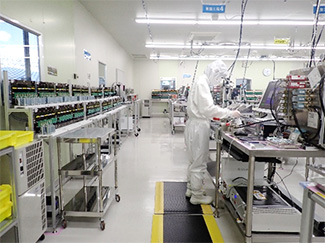
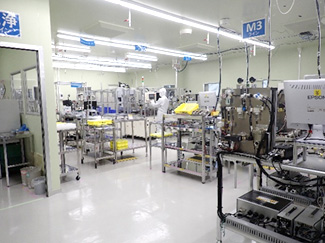
| Cleaning and assembly process | Ultrapure water cleaning of parts + cleanroom assembly |
| Valve characteristics | Proportional control and high responsiveness in the microflow range, and excellent shut-off performance |
By fulfilling these conditions, the "valve that does not contaminate gas" is achieved.
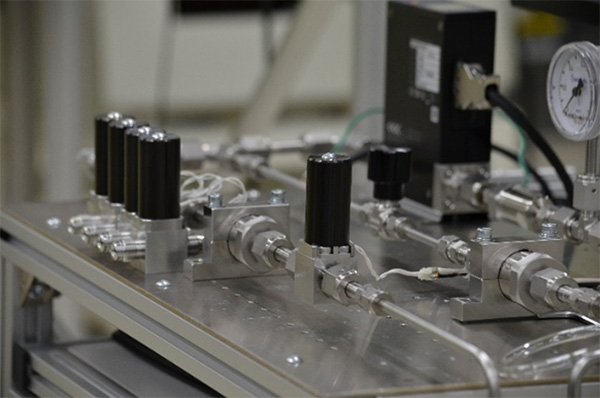
【Takano's proportional control solenoid valve】
(1)Composed of highly corrosion-resistant materials.
For gas contact parts, we select highly corrosion-resistant materials such as SUS316L, Hastelloy, fluororesin, and K-M45, which are chemically stable even in corrosive environments.
This prevents gas contamination caused by ion elution or metal corrosion, even in acidic/alkaline gases and humid atmospheres.
*K-M45 is the only ultra-high purity grade certified material among ferritic stainless steels in SEMI F105-0914 "Guide to Metal Materials Compatibility in Gas Distribution Systems".
(2)High reliability and cleanliness achieved through a non-sliding structure
The drive unit is guided by two upper and lower plate springs and supported in the center, eliminating sliding. This unique structure ensures no wear and achieves "smooth proportional drive," maintaining stable flow characteristics even with repeated use. Additionally, since there are no sliding parts, "low particle generation" is accomplished, allowing safe use even in clean environments.
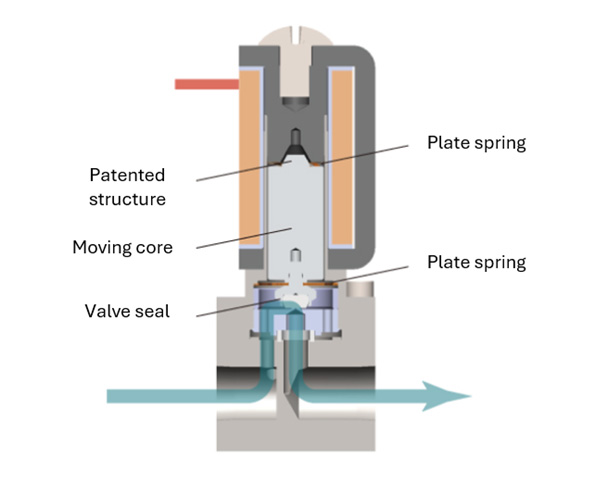
(3)The patented unique suction structure enables high-resolution proportional
characteristics in response to input signals. This ensures high responsiveness to slight changes in electrical signals, delivering excellent proportional control and high shut-off performance in microflow ranges. It allows precise control of microflows and pressures, providing stable high precision control for applications ranging from research use to mass production equipment.
4. Application Fields
- Semiconductor manufacturing equipment (front-end process)
- Semiconductor transport equipment (N2 purge)
- Analytical and measurement equipment (GC, MS, etc.)
- Respiratory medical devices
- Research facilities, gas mixing equipment
5. Conclusion
In modern manufacturing where cleanliness is demanded, selecting valves that do not contaminate gases is essential.
Proportional control valves not only offer the convenience of freely controlling flow rates via electrical signals, but also contribute to the advancement of next-generation clean gas control by combining cleanliness, sealing performance, and reproducibility in their structure.
For those who wish to learn more about proportional control valves, please take a look at our past columns as well.
